Battle between the Heliumite and Zodangan fleets
A Princess of MarsThe Battle between the Heliumite and Zodangan fleets breaks the siege of Helium and turns a victorious Zodangan advance into defeat. The engagement joins Heliumite naval power to the Green Martians’ formidable small-arms fire: unable to serve as naval gunners, the Tharks nevertheless help decide the battle from above the contending fleets. Its victory frees the city, while the Zodangan surrender custom makes the end of combat as consequential as the fighting itself.
Causes and Forces
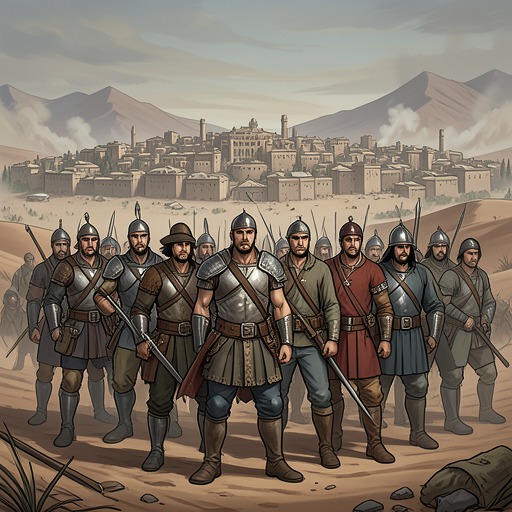
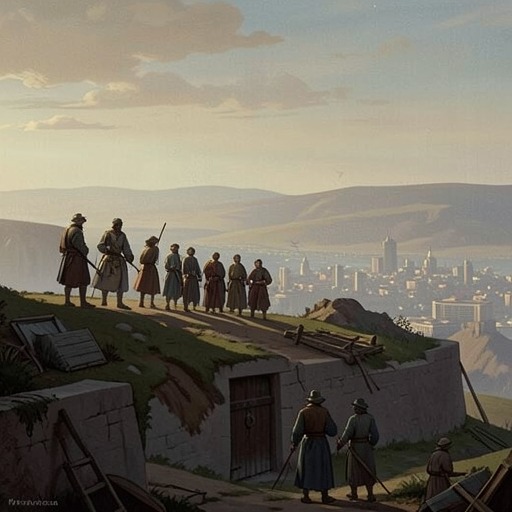
The battle begins after John Carter and the Green Martian host reach Helium. They have marched toward Zodanga in a force that grew from one hundred thousand to one hundred and fifty thousand warriors, with Tars Tarkas recruiting additional hordes along the way. The army’s immediate goal is to attack Zodanga, but its arrival brings it into the existing struggle around Helium: Zodangan battleships rise from the besiegers’ camps to meet the approaching force.
Helium’s fleet recognizes the newcomers as allies and sends hundreds of vessels to help. The Zodangans have no such uncertainty about their opponents. The Green Martian ships open fire almost as they leave the ground, and their warriors’ exceptional marksmanship puts immediate pressure on the advancing fleet. The encounter thus brings together two kinds of force: the naval batteries of Helium and the individual fire of the Green Martians.
The Aerial Engagement
The Thark vessels circle above the battle rather than joining the fleets’ exchange of broadsides. Their batteries are of little use in their hands, since the Tharks have no navy and lack skill in naval gunnery. Their small arms, however, are effective against the opposing ships and help determine the engagement’s outcome. The distinction matters: the Green Martians do not win by suddenly acquiring a naval capability, but by applying a different kind of fighting skill to the battle.
At first, the Heliumite and Zodangan forces circle at the same altitude, each firing broadside after broadside. The battle changes when Heliumite vessels maneuver above their adversaries. Two ships reach positions from which they can rain exploding bombs from their keel batteries onto the Zodangan fleet. Other Heliumite battleships follow their advantage in altitude, turning the contest into a rout. Some Zodangan ships drift away as wrecks toward the scarlet tower of greater Helium; others try to escape, but are surrounded by thousands of small individual fliers, with Heliumite battleships poised above them to send boarding parties onto their decks.
The scale of the reversal is sharply compressed in time. Little more than an hour after the Zodangan squadron rises from the besiegers’ camp to engage, the battle is over. The surviving Zodangan vessels are directed toward Helium under prize crews. The fleet that had advanced to meet the relieving force has been defeated, and the aerial blockade’s power has passed to its opponents.
Surrender and Its Cost
Defeat does not immediately end the fighting. An age-old custom requires the commander of a vanquished vessel to signal surrender by leaping from the ship and plunging to earth. One after another, Zodangan commanders hold their colors aloft and jump from the towering bows, accepting death rather than surrendering by any less terrible sign. Their deaths make the fleet’s capitulation a ritual enacted ship by ship, even after the military balance has turned decisively against them.
The sacrifices continue until the commander of the entire fleet takes the same fatal plunge. His action signals the surrender of the remaining vessels, and only then does the fighting cease. The custom gives the victory a grim second ending: the opposing fleet is subdued, but its commanders’ deaths continue until the highest authority has made submission unmistakable. The narrative presents this practice as an established demand of naval surrender, not as a tactical necessity of the battle.
Dejah Thoris and the Relief of Helium
Once the engagement is over, John Carter signals Helium’s flagship and calls out that Dejah Thoris is aboard. He asks that she be transferred to the flagship so she can be taken immediately to the city. Her presence changes the meaning of the military victory for the Heliumites: the fleet has not only relieved the besieged city but also recovered its princess.
The response spreads visibly across the fleet. A great cry rises from the flagship, and Dejah Thoris’s colors appear at a hundred points on its upper works. The other ships take up the acclaim and unfurl her colors as well. The battle’s closing image therefore shifts from wreckage and ritual death to public recognition: Dejah Thoris’s return is announced throughout the victorious fleet, binding the relief of Helium to the recovery of its princess.